
A division of The JBN Group, Inc.
Hip-Roof Cedar Patio Covers
Slopes on all four sides, for the most finished roofline in the lineup.
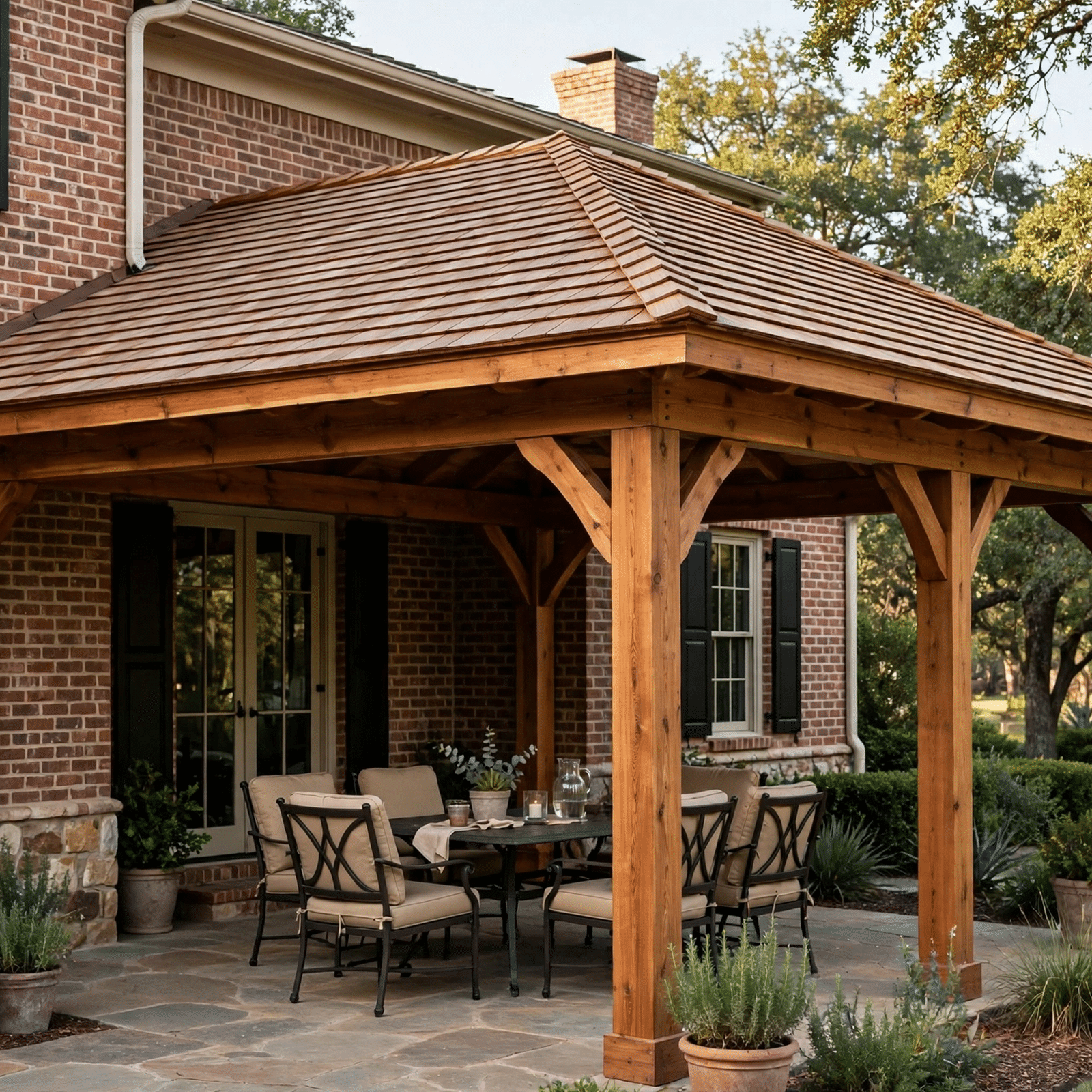
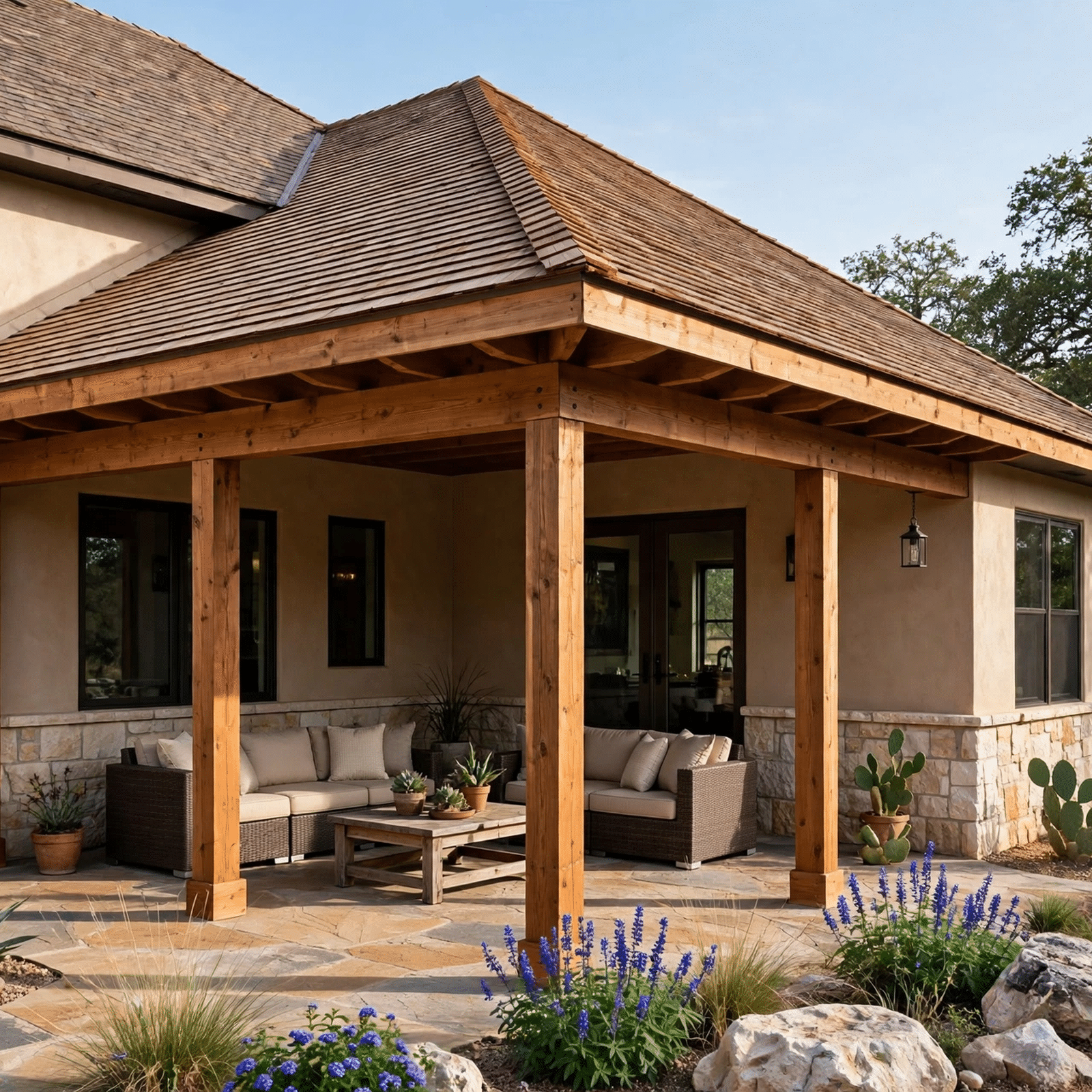
Hip-Roof Cedar Patio Covers trade the flat gable wall for a fourth slope, so the roof looks complete from every angle in the yard. The profile is traditional, the wind behavior is calm, and when your house already wears a hip roof, the cover can match it so closely that visitors assume it was always there.
The traditional choice
Four Slopes, No Unfinished Side
Stand anywhere in the yard and a hip roof looks right. That is the whole argument for it, and for a lot of Argyle homes it is enough.
A gable cover has two finished sides and two ends. A hip cover slopes down on all four sides, so there is no tall flat wall at the end and no angle where the cover looks like an add-on. On a corner lot or a yard visible from the street, that finished-all-around profile is worth real money in how the house presents.
It is also the polite roof for close neighbors: the sloped end is lower and softer than a gable wall looming over the fence. Call (972) 471-9167 and we will draw one for your house.
The rest of the backyard
Complete the Space Under the Hip Roof
The roof sets the tone; these are the pieces that finish the room beneath it.
Where four slopes earn it
The Homes a Hip Roof Suits Best
A hip roof is the premium carpentry choice. These are the situations where homeowners are glad they picked it.
Hip-Roof Houses
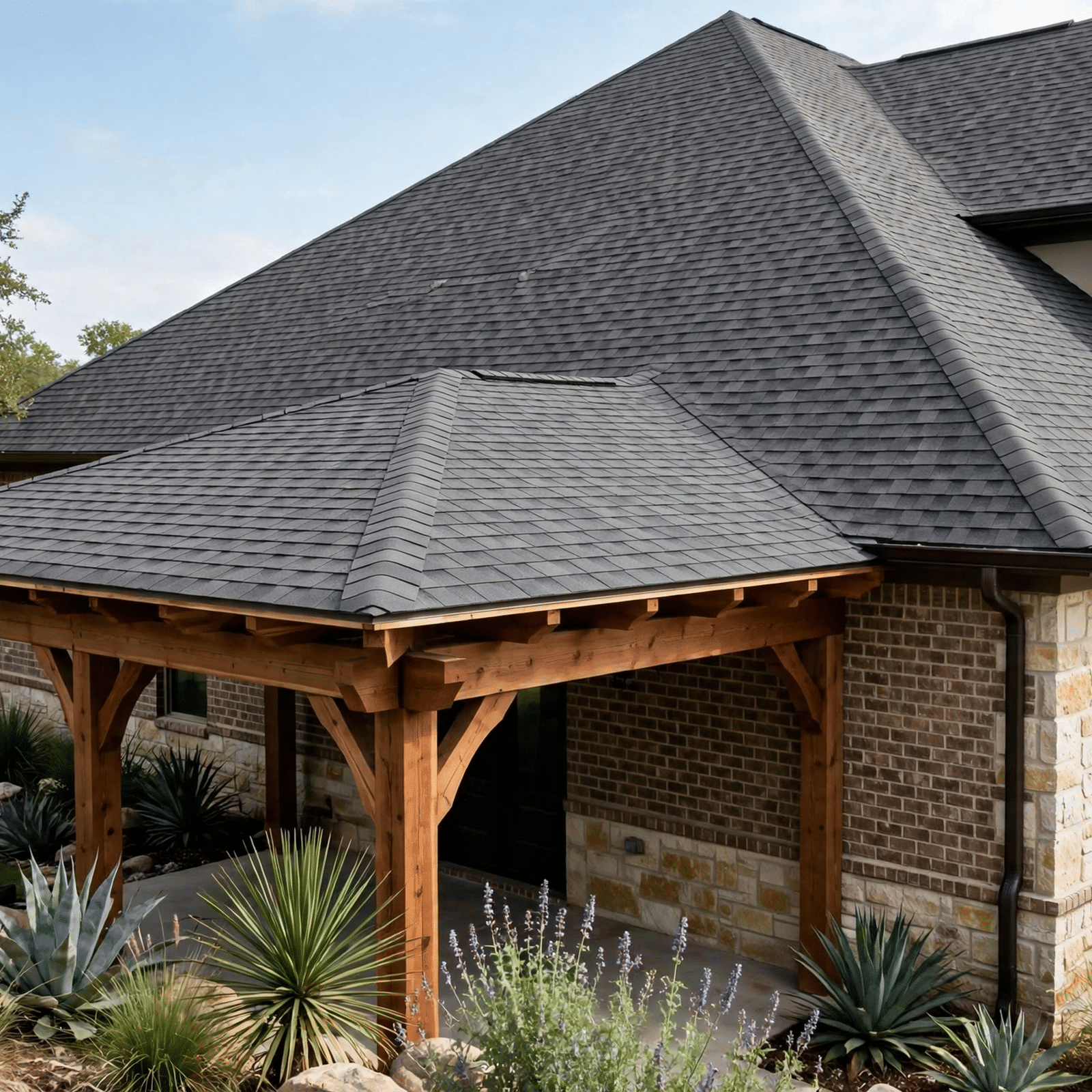
If your main roof is a hip, a gable cover will always look borrowed. A hip cover in the same pitch and shingle disappears into the house.
Corner Lots
Two streets can see your backyard. Four finished slopes mean there is no bad angle for the cover to be judged from.
Windy, Open Lots
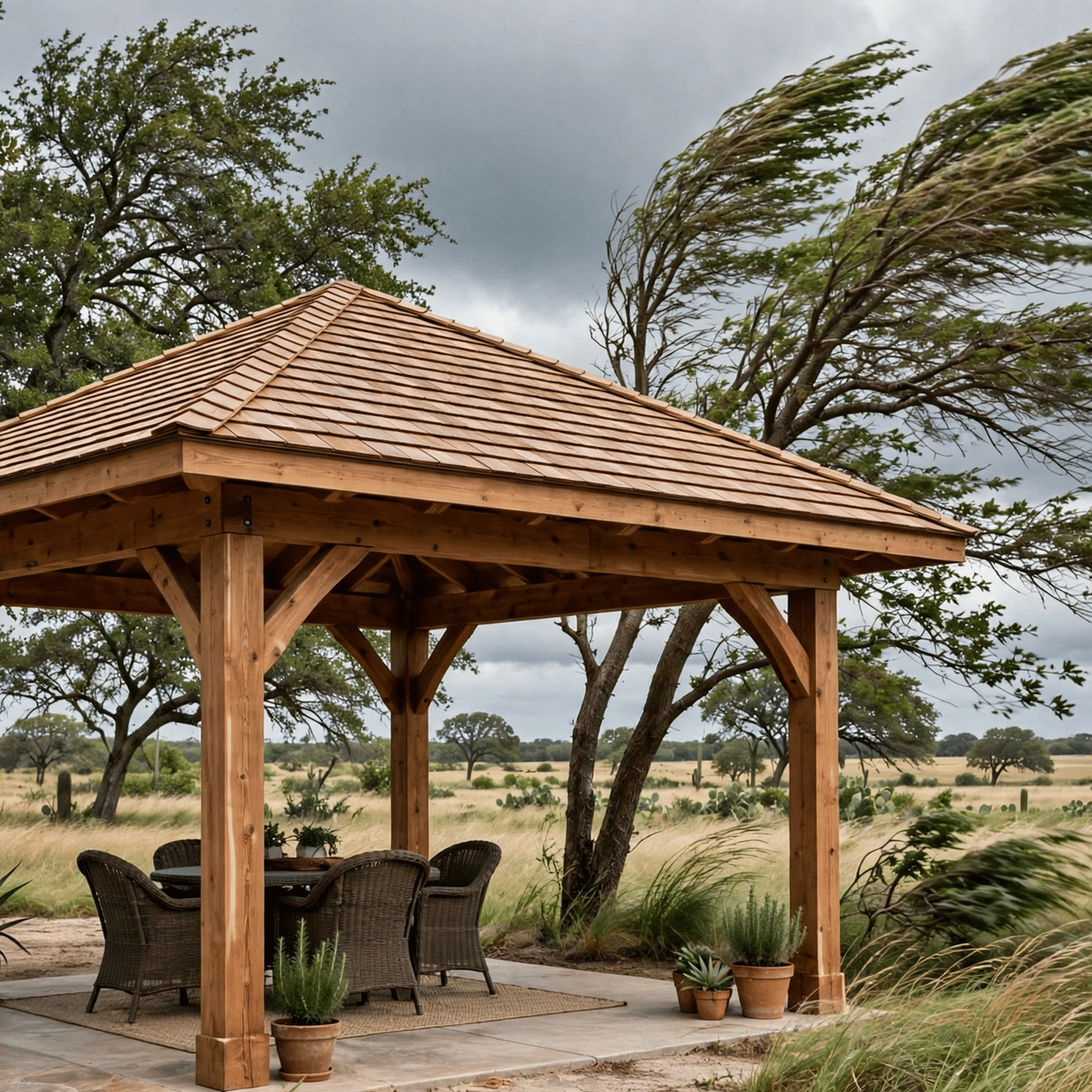
Out on open Argyle acreage, wind looks for a wall to push. Slopes give it nothing flat to hit, from any direction.
Corner-Wrap Patios
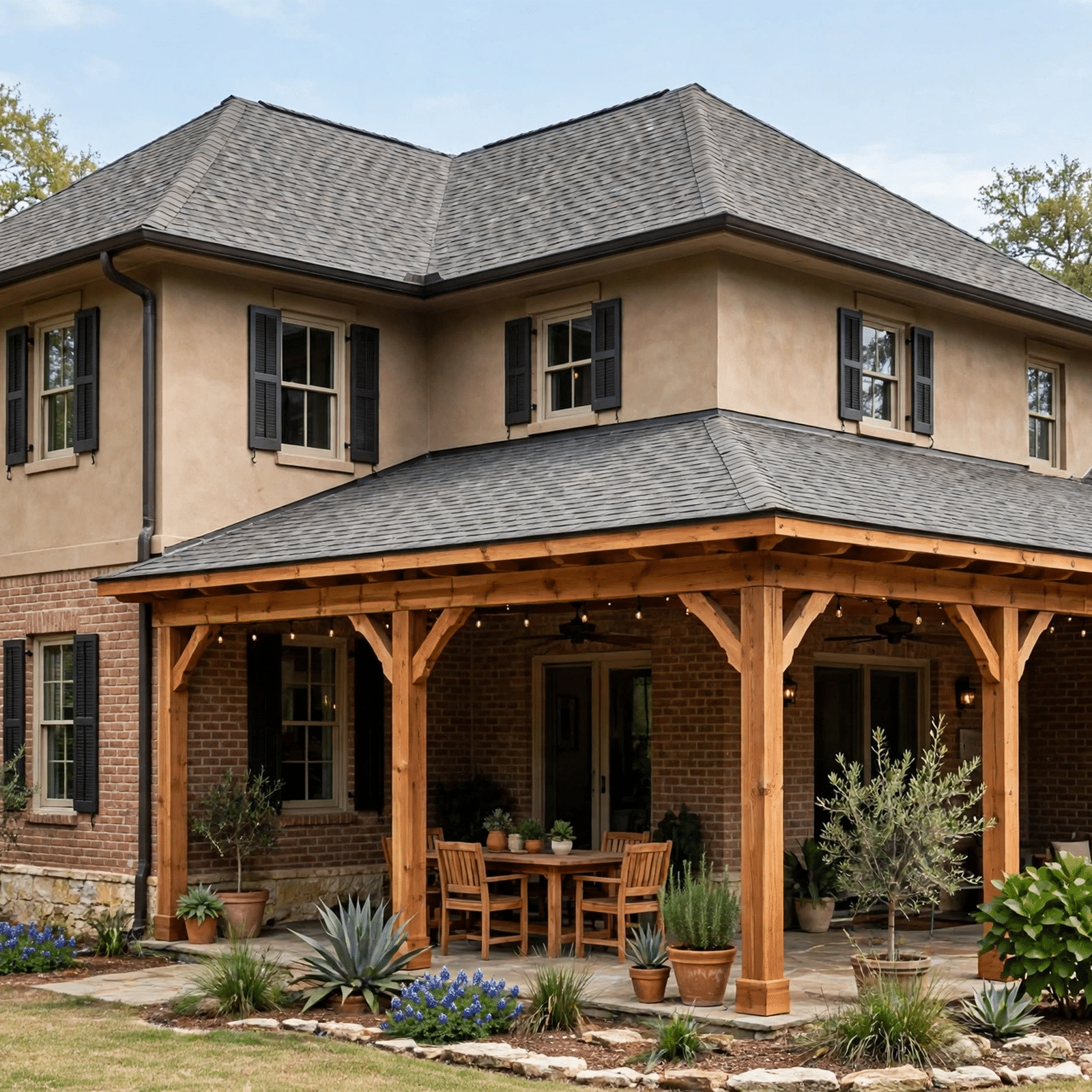
When the patio turns the corner of the house, the hip end turns with it cleanly instead of ending in a wall.
Freestanding Pavilions
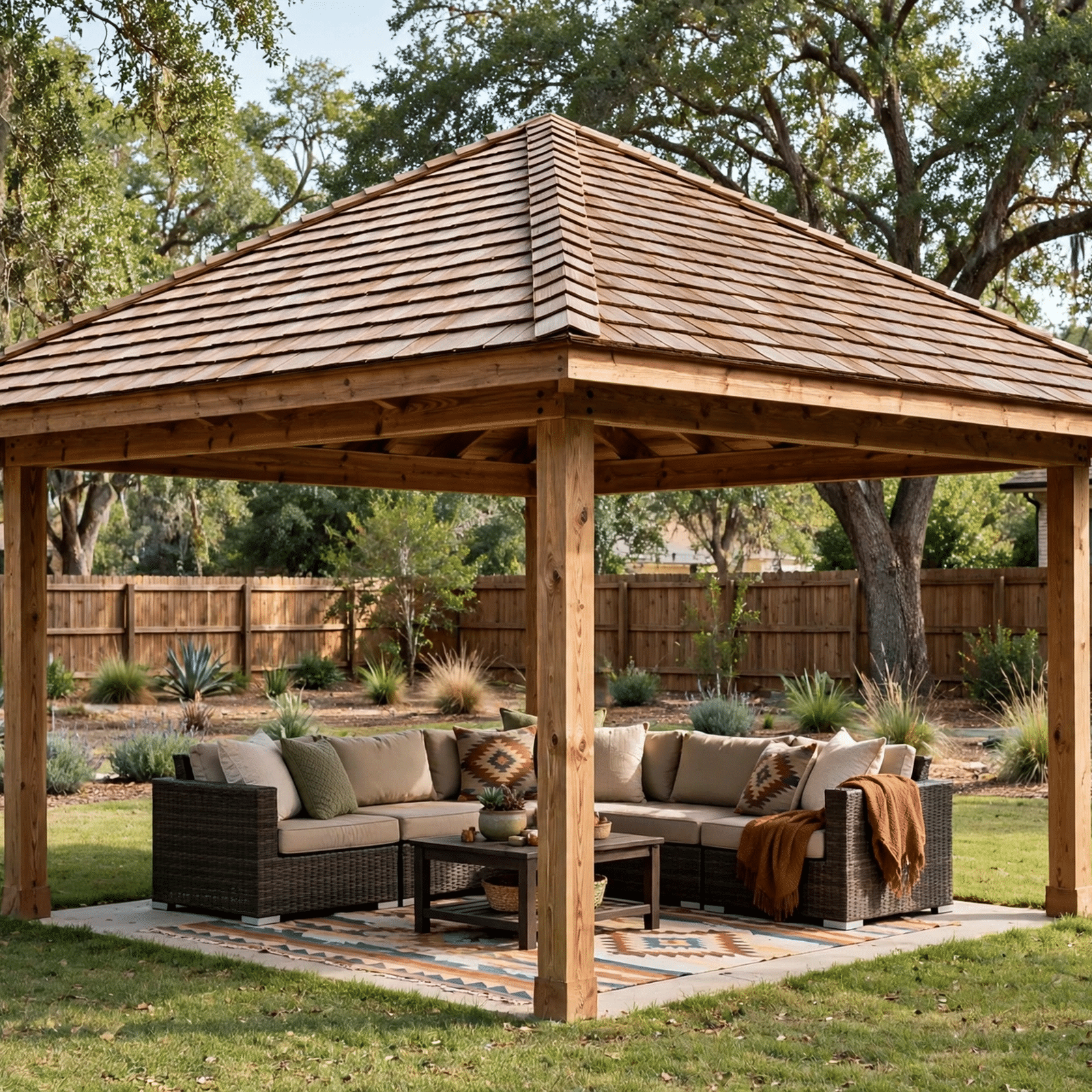
A standalone structure is seen from all sides by everyone. The hip roof is the only form that finishes all four.
Traditional Architecture
Brick colonials and classic Texas traditional homes carry hip roofs natively. The cover keeps the house's own language.
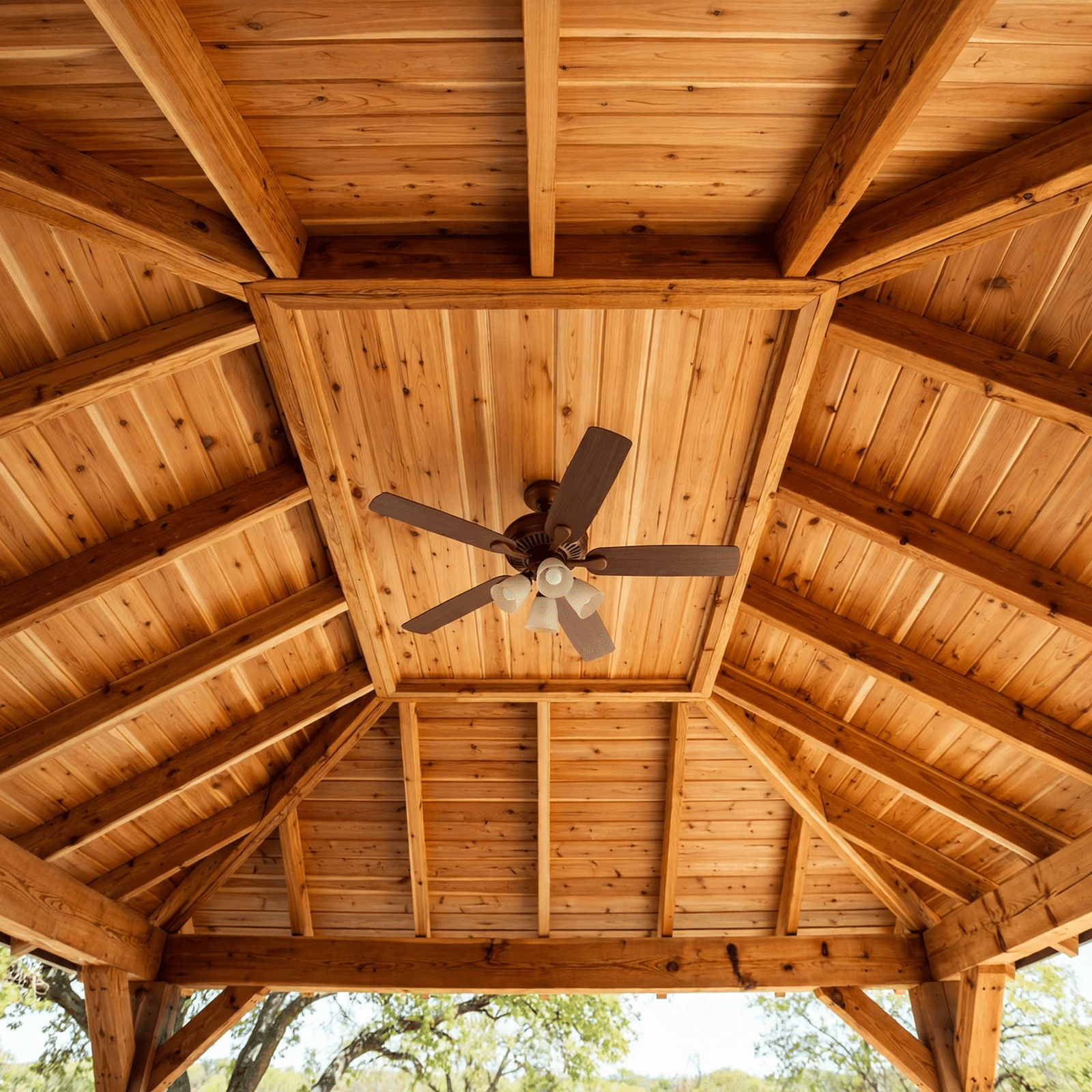
The ceiling underneath
A Tray Ceiling in Cedar
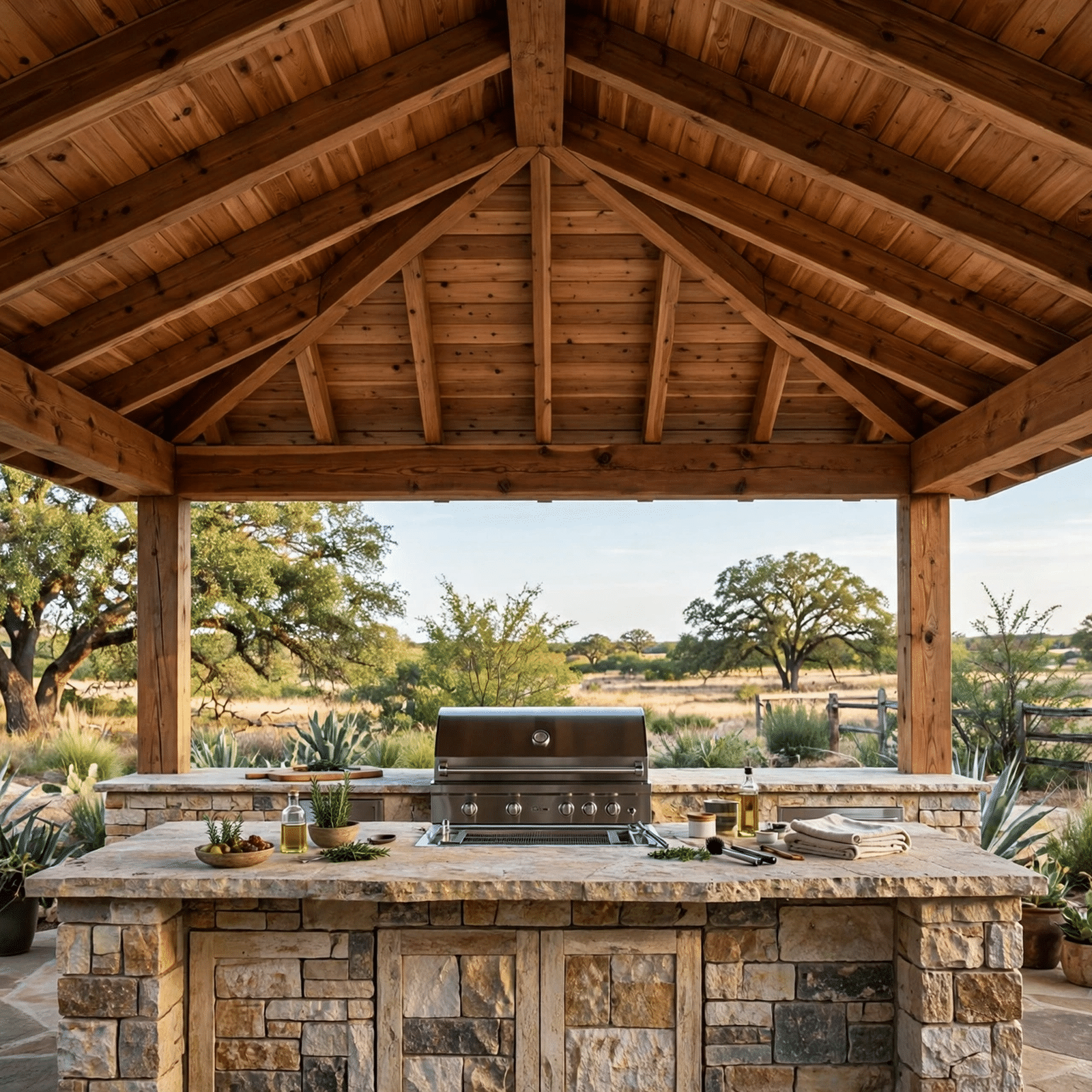
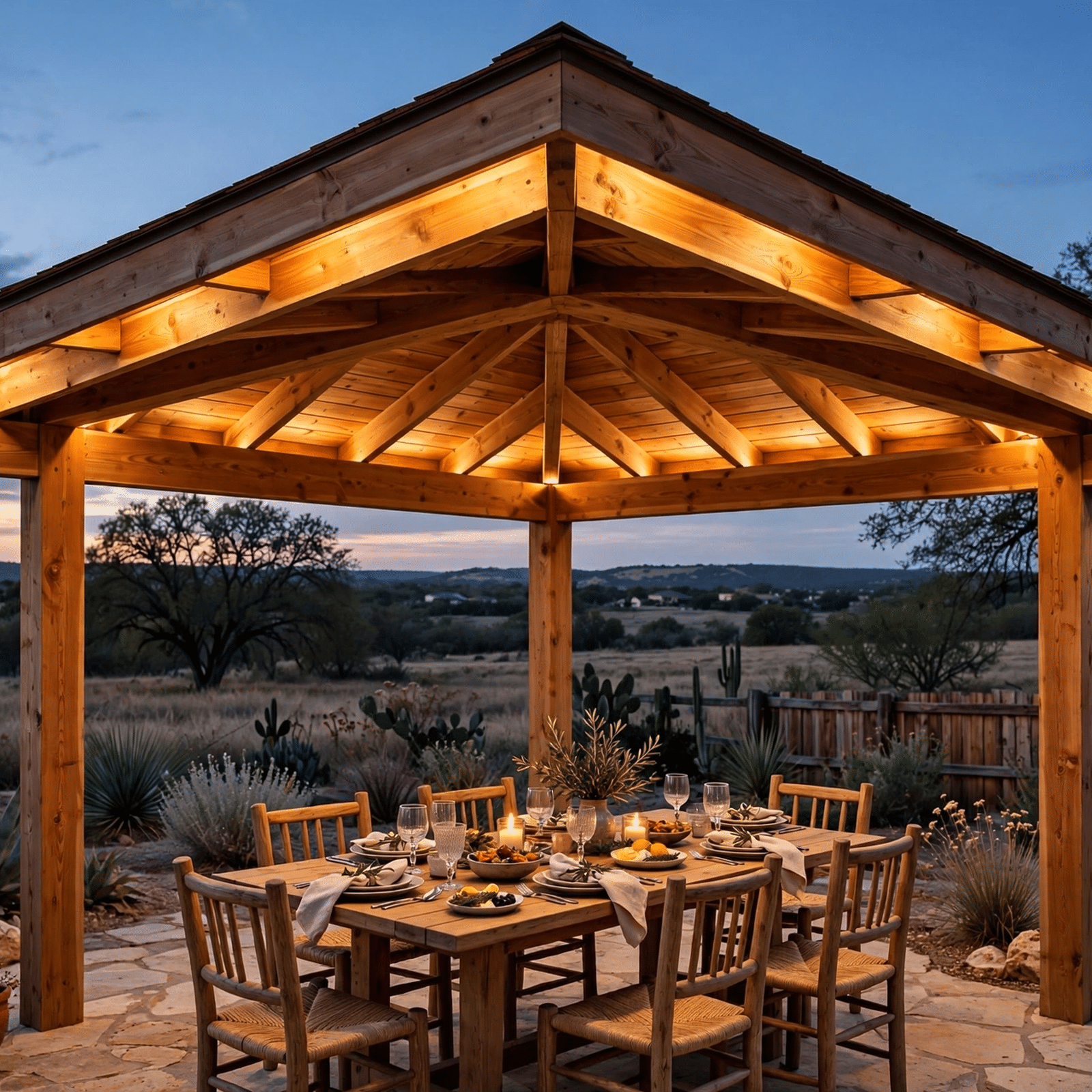
Under a hip roof, the ceiling rises on all four sides to a level center — a tray ceiling, lined in cedar.
It is the most architectural ceiling of any cover style: sloped cedar planes climbing to a flat heart where a fan or light hangs. From a seat below, the whole roof reads as crafted woodwork, which is exactly what it is.
- Cedar lining on all four ceiling slopes
- A level center bay for fans and lighting
- Hip beams exposed and stained to match
- Even headroom feel from every seat below
The company behind the cover
A Division of The JBN Group, Building Since 1996
Argyle Patio Covers is the outdoor living team of The JBN Group, Inc. The same company has remodeled North Texas homes for nearly thirty years.
Real carpentry
How a Hip Cover Gets Framed
Four slopes means every corner is a compound angle. This is the build that separates carpenters from assemblers.
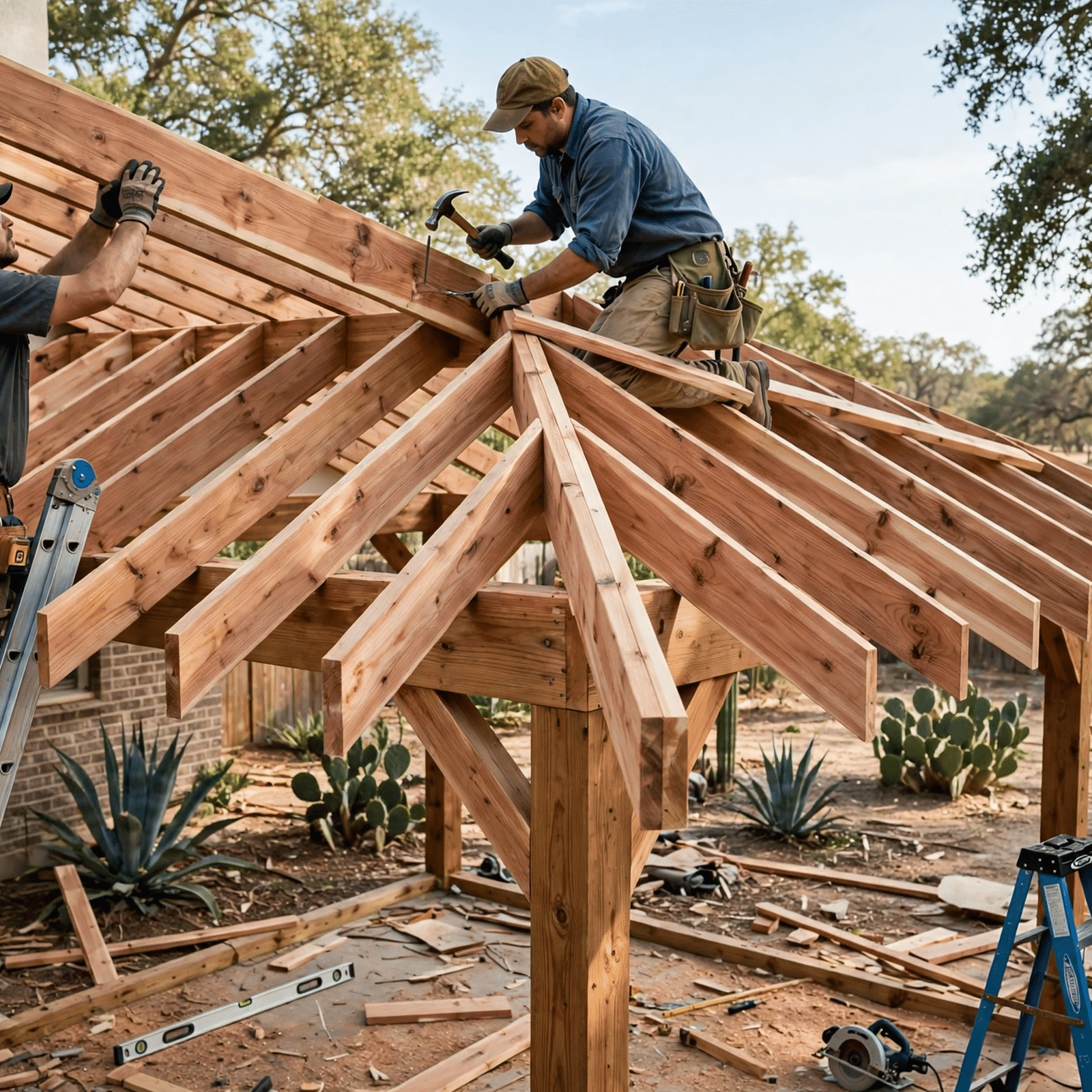
Hip rafters run each corner at an angle, jack rafters fan in from both sides, and the ridge sits short and level at the top. We cut and fit all of it on site, then deck, shingle, and cap it to match your roof.
- Posts and beams set on poured footings
- Hip rafters and jack rafters cut to compound angles
- Roof decked and shingled, ridge caps matched to yours
- Gutter ring fitted around all four eaves
- Cedar tray ceiling lined in underneath
We Come Measure
We visit your home, measure the patio, and study the roofline and the sun with you.
Design and Firm Price
You get a design drawn for your house and one firm price in writing. No allowance games.
Permits and the Build
We pull the permits, handle the HOA, set the posts, and frame the cover on site.
Walk It Together
We walk the finished cover with you, check every finish detail, and hand it over clean.
Where we build covers
From Argyle Across North Texas
Argyle is home, and the crews run from here to Denton, Lantana, Corinth, Flower Mound, Highland Village, Lewisville, Lake Dallas, Little Elm, Frisco, Plano, The Colony, Southlake, Grapevine, Keller, Roanoke, Northlake, Justin, and Krum.
If your town is not on the list, call (972) 471-9167 and ask. If we cannot build it right, we will tell you so.
What homeowners ask us first
Hip-Roof Questions and Answers
What do Hip-Roof Cedar Patio Covers cost?
A hip roof has more cuts and more framing than a gable or shed roof, so it usually prices above them. The size of the cover and the roof material drive the number, and we give you one firm price in writing at the free consultation.
Why do homeowners choose a hip roof?
Two reasons: looks and weather. Slopes on all four sides give a finished, traditional profile from every angle, and there is no flat gable wall for storm wind to push against, so it handles Texas weather calmly.
Can a hip cover match a house that already has a hip roof?
That is its best trick. We match the pitch, shingles, and ridge caps to your main roof so the cover reads as part of the original build from the street and the yard.
Are hip roofs harder to build?
They take more carpentry — every corner is a hip rafter with jack rafters fanning in. That is exactly why we frame them on site with our own crew instead of using kits.
Does a hip roof work on a freestanding cover?
Yes. A freestanding hip pavilion looks finished from all four sides, which matters when the neighbors and the whole yard can see every side of it.
How does a hip roof handle rain?
Water sheds off all four slopes into a gutter run that rings the cover. There are no valleys against the house wall, which is where leaks usually start.
Free visit, firm price
Finish Your Roofline Properly
Tell us about your house and patio, and we will draw a hip-roof cedar cover that looks like it was always part of the home, priced in writing.